








Quick Posture Drills You Can Do Anywhere

Quick Posture Drills You Can Do Anywhere
Great posture isn't a luxury reserved for gym floors or quiet mornings. It's a practical skill you can cultivate in the margins of daily life-between meetings, in line at the coffee shop, on a train, or during a quick break at your desk. The secret is simplicity: a handful of micro-movements that reset the spine, engage the core, and release built-up tension without requiring equipment, a lot of space, or a formal workout. This guide gives you a library of quick posture drills you can do anywhere, plus practical tips for making them a habit. By weaving these drills into your day, you'll stand taller, breathe better, and feel more energized with less effort.
Why posture matters more than you might think
Posture is the canvas on which movement and breath paint their effects. When alignment is off, the body often compensates with locked joints, overworked muscles, and a cascade of subtle inefficiencies that drain energy and leave you feeling tense or fatigued. Conversely, good posture supports efficient breathing, reduces strain on the neck and back, improves core engagement, and can sharpen focus. It's not about chasing a rigid "perfect" pose; it's about balancing the spine, letting the rib cage expand, and reducing unnecessary muscular effort.
In today's world, we spend enormous amounts of time in front of screens, slouching at desks, or cramming into vehicles. Even small daily misalignments add up. The beauty of quick posture drills is that they re-educate your nervous system to prefer neutral positions. Over time, these small resets can break the habit of slumping, enabling you to maintain better posture with less conscious effort.
What you'll need (and what you won't)
The best part about these drills: almost nothing. You won't need gym equipment, pricey gear, or a dedicated space. In fact, they're designed to be performed in tight quarters-at a desk, in a break room, or in a hotel room. A few general guidelines to get the most out of them:
- Wear comfortable clothing that doesn't restrict movement.
- Move slowly and with awareness. Quality matters more than speed.
- Breath through each movement. Inhale to prepare, exhale as you engage or lengthen, and reset with a natural breath between drills.
- Start small. If you're new to these drills, begin with one to three minutes a day and gradually build to longer sessions.
Optional but helpful: a chair or a wall that you can lean against for support. A doorway can also serve as a makeshift reference for alignment exercises. If you have a back problem or a medical condition, check with a healthcare professional before starting a new movement routine.
Central ideas behind quick posture drills
Before diving into the drills, here are a few core concepts that guide each movement:
- Neutral spine first: aim for a gentle natural curve in the neck, a straight thoracic spine (mid-back), and a pelvic position that doesn't exaggerate the lower back curve.
- Shoulders over hips: many posture problems arise from the shoulders creeping forward. Relearning to bring the shoulder blades toward the spine helps counteract this drift.
- Breath drives alignment: exhale as you lift, expand, or lengthen, and inhale as you settle into position. Breath is a powerful cue for bracing the core and maintaining stability.
- Mobility with control: joints move through their full range only as much as the surrounding muscles can control it. Quality control reduces risk of strain.
The rotation: a library of drills you can mix and match
The following drills are designed for versatility. They're categorized by the body region they most directly affect, but you'll often find benefits ripple through multiple areas. Try them individually, or pick a few to assemble a five- to ten-minute micro-routine that you can perform anywhere.
1) Neck release and reset
Why it helps: A lot of neck tension stems from forward head posture and muscular imbalances between the neck and upper back. A gentle reset helps reduce stiffness and encourages a more balanced cervical spine.
- Stand tall or sit up straight in a chair with feet hip-width apart. Allow the chin to tuck slightly, lengthening the back of the neck.
- Gently nod yes (small movements) five times, then slowly turn your head left and right five times each, keeping the chin level and the shoulders relaxed.
- Bring the head back to neutral. Place one hand on the back of your head and lightly resist as you nod forward and back to feel subtle engagement in the neck muscles. Repeat two to three times on each side.
- Finish with a slow shoulder roll to reconnect to the upper back and chest area.
Tips: avoid forcing your range of motion. The goal is to notice stiffness and gradually ease it through controlled movement and gentle breathing.
2) Shoulder blade squeeze (scapular retraction)
Why it helps: Hunched shoulders are common from desk work. Stronger, better-positioned shoulder blades improve posture and reduce upper-back tension.
- Stand or sit tall. Let arms hang relaxed by your sides. Without lifting the shoulders, imagine gently pinching the shoulder blades toward the spine.
- Hold for 3-5 seconds, then release with a calm exhale. Repeat 8-12 times.
- Progress by placing hands behind your head or squeezing a towel between the elbows to increase engagement.
Tip: keep the neck long and the jaw soft to avoid tensing the upper trapezius muscles.
3) Chest opener against a wall
Why it helps: A tight chest can pull the shoulders forward and tilt the ribcage, making breathing shallower. This drill helps re-expand the chest and encourage upright posture.
- Stand a small distance from a wall (about an arm's length). Place your forearm on the wall with the elbow at shoulder height, forming a goalpost angle with your arm.
- Gently rotate your body away from the wall until you feel a stretch across the chest and front shoulder. Keep your spine long and your hips squared.
- Hold 20-30 seconds, breathe deeply, then switch sides if needed. Repeat 2-3 times per side.
Note: if you have shoulder mobility limitations, adjust the elbow height lower to reduce strain.
4) Thoracic spine rotations (twists) seated or standing
Why it helps: mid-back mobility is essential for posture. Tight thoracic joints often contribute to a forward head position and rounded shoulders.
- Cross your arms over your chest or place a hand on the opposite shoulder. Keep hips and pelvis stable.
- Rotate your upper torso to one side, keeping your gaze forward. Return to center and repeat to the other side.
- Do 8-12 repetitions on each side, moving through a comfortable range of motion.
Tips: avoid rushing. Gentle, controlled twists train the spine to move with the rest of the body rather than pinching muscles in the lower back.
5) Hip hinge and pelvic tilt (neutral spine work)
Why it helps: many sit-to-stand challenges come from poor hip hinge mechanics and a misaligned pelvis. This drill trains spinal neutrality in movement patterns you use daily.
- Stand with feet hip-width apart. Place hands on your hips or lightly on your belly to feel the movement of your pelvis.
- Softly bend at the hips (not the waist), keeping your spine in a natural curve. Return to standing tall, engaging the glutes.
- As you hinge, imagine a string lengthening at the crown of your head. Perform 10-12 reps, moving slowly and with control.
Alternative: sit on a chair and practice posterior pelvic tilt (flattening the low back toward the chair) for 5-8 reps to reinforce neutral alignment.
6) Standing tall with a wall drill
Why it helps: a quick alignment check you can do anywhere. It trains keeping the spine lengthened and joints stacked.
- Stand with your back against a wall, heels about 2-3 inches from the baseboard. Your sacrum, mid-back, and head should lightly contact the wall if your posture allows.
- Adjust your stance so your feet support a balanced weight. Tuck your chin slightly and create a tiny "space" under the lower back if necessary.
- Take 5 breaths, focusing on widening the collarbone, aligning the ears over shoulders, and letting the shoulder blades glide down your back.
Hints: if you can't touch the wall with your lower back, practice at the edge and slowly work toward a gentler contact over time.
7) Wall slides (for posture and scapular control)
Why it helps: wall slides train glenohumeral and scapular mechanics, reinforcing how your shoulder blades move in relation to the spine.
- Stand with your back to a wall and your arms at a 90-degree angle, forearms on the wall as if making a "goal post."
- Slowly slide your forearms up the wall, keeping contact with the wall across your upper back and the rear of your hands. Return to the starting position.
- Perform 8-12 repetitions, keeping the breath steady and the core engaged.
Tip: if your range is limited, keep movements small and gradually increase as mobility improves.
8) Seated spinal twist (gentle and portable)
Why it helps: this twist wakes up the spine and helps normalize rotational stiffness that can develop from prolonged sitting.
- Sit tall in a chair with feet flat. Cross your arms over your chest or place your right hand on the outside of your left thigh.
- Gently rotate the upper body to the left, keeping your hips rooted. Return to center and switch sides.
- Do 6-8 twists per side, using your breath to guide the movement.
Note: keep the movement within a comfortable range and avoid forcing the twist if you have lower-back pain.
9) Hip flexor release (standing or kneeling)
Why it helps: tight hip flexors can tilt the pelvis and contribute to an exaggerated lumbar curve. Releasing them supports a more balanced pelvis and posture overall.
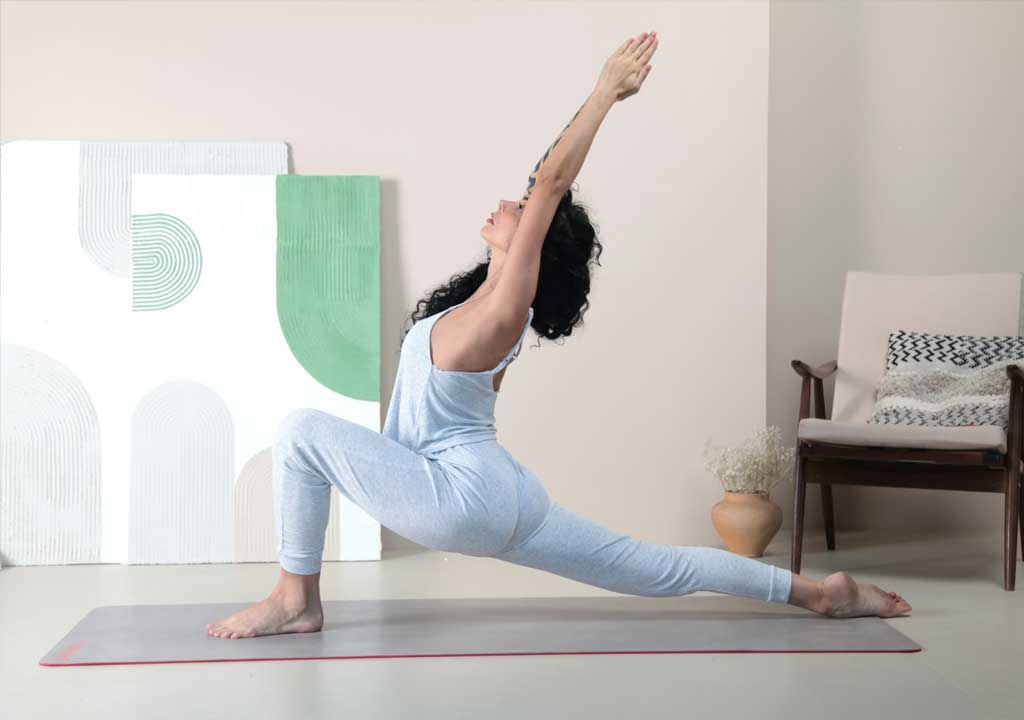
- Step one foot forward into a shallow lunge while keeping the back knee down. Place a hand on your front thigh for balance.
- Gently press your hips forward to feel a stretch in the front of the rear leg. Keep your torso upright and chest lifted.
- Hold 20-30 seconds on each side, breathing deeply, then release and return to stand.
These can be done briefly during a water break or between meetings to keep the hips from locking up.
10) Breath-and-brace reset (a quick core stability cue)
Why it helps: posture is not just about the spine; it's about the whole inside system working in harmony. This drill combines breathing with gentle core engagement to stabilize alignment.
- Stand or sit tall. Place one hand on your belly and the other on your chest.
- Inhale through the nose, expanding the belly more than the chest. Exhale slowly, drawing the belly toward the spine while gently bracing the core.
- Repeat 6-12 breaths, maintaining a calm rhythm. You can do this any time you need a quick reset.
11) Seated posture reminder (desk-friendly)**
Why it helps: a quick check-in during work can prevent the tight shoulders and forward head syndrome that creep up during long desk sessions.
- Sit with your feet flat and your back away from the chair. Sit tall, lengthening the crown of the head toward the ceiling.
- Imagine a string pulling the head up and the spine stacking over the pelvis. Gently roll the shoulders back and down.
- Take a slow breath, then return to work with a renewed sense of alignment. Repeat every 30-60 minutes as a small habit cue.
12) Quick hip-to-shoulder combination flow (two-minute sequence)
Why it helps: combining mobility with posture cues creates a simple mini-workout that re-educates the body to move with alignment rather than against it.
- Stand tall. Do a gentle thoracic twist (right shoulder toward the wall behind you) and then switch sides.
- Squeeze the shoulder blades together, hold for a breath, then release and lengthen up through the crown of the head.
- Finish with a light toe-to-head reach: hinge at the hips, reach toward the toes, then rise slowly, stacking vertebrae one-by-one.
Putting it together: a five- to ten-minute daily routine you can do anywhere
To make posture improvements routine, you can combine several of the drills above into a short flow. The aim is to move with intention, maintain controlled breathing, and finish with a sense of renewed alignment. Here's a sample sequence you can perform in roughly five minutes, ideally twice a day. You can expand it to ten minutes as you become more comfortable.
- Neck release and reset - 2 minutes total (5-6 cycles of gentle nods and turns).
- Shoulder blade squeeze - 8-12 reps, holding each for 2 seconds at the peak.
- Chest opener against a wall - 20-30 seconds per side.
- Thoracic rotations - 8-12 reps per side.
- Hip hinge and pelvic tilt - 10-12 reps.
- Wall slides - 8-12 reps.
- Breath-and-brace reset - 6-12 breaths.
For a longer routine (about ten minutes), you can add the seated spinal twist, hip flexor release, and the quick hip-to-shoulder combination flow. The key is consistency: tiny pockets of effort that accumulate over days and weeks yield meaningful changes.
How to adapt these drills to different spaces
One of the biggest advantages of quick posture drills is how forgiving they are of space limitations. Here are practical tips to adapt the drills to common environments:
- In a coffee shop or line: use your body as a small tripod-feet hip-width apart, spine tall, shoulders back. Use a compact wall or the back of a chair to perform the chest opener or wall slides without needing to move far.
- At a desk: perform the neck release, scapular squeezes, and breath-and-brace reset during short breaks. The wall slides can be adapted with a doorway for support, or simply performed with the arms cross-body to simulate the same scapular engagement.
- In a hotel room or hotel gym: the same drills apply, with a small mat or towel for floor-based mobility and a chair or wall for support during the chest opener or wall slides.
- While traveling: a compact routine in a hotel room can keep you from losing alignment while away from your regular routine. The emphasis remains on slow, controlled movements and gentle breathing.
Common mistakes to avoid
Even with the best intentions, it's possible to miss the point of posture drills. Here are a few common missteps and how to correct them:
- Pushing through pain: stop if you feel sharp pain. A slight stretch or a subtle increase in mobility is fine, but pain is a red flag.
- Overarching the lower back: maintain a neutral spine through the drills. If you feel the lower back exaggerating its curve, reduce the range of motion and focus on hinge from the hips and engagement of the core.
- Forgetting the breath: rely on breath as a driver for movement. Holding the breath can reinforce tension and reduce effectiveness.
- Rushing the movements: these drills are about quality, not speed. Slow, deliberate movements yield better results than fast, jerky actions.
Safety and listening to your body
Posture work should feel restorative, not painful. If you have any injuries, chronic pain, or a medical condition affecting your spine, talk with a healthcare professional before starting a posture program. If anything causes sharp or persistent pain, stop and reassess your form. If you're pregnant, consult with a medical professional about safe positions and adjustments during the routine.
Making posture a presence, not a habit you forget
Turning micro-movements into a lasting habit takes a small amount of consistency and a few simple triggers. Here are some ideas to help you make these drills stick:
- Anchor them to existing routines: do a quick posture check after you brush your teeth, during a coffee break, or before you step into a meeting. The cue helps the habit become automatic.
- Set reminders: a calendar reminder, a sticky note on your monitor, or a phone alert can prompt you to do a two- to five-minute reset several times a day.
- Track your feelings: note how you feel after a quick session-more alert, less neck tension, or a lighter chest. Positive feedback reinforces the practice.
- Progress gradually: start with one or two drills and add more as you get comfortable. It's better to do a few well than many poorly.
Frequently asked questions
Q: Will these drills cure back pain?
A: They can help reduce tension and improve alignment, which may lessen some types of discomfort. However, chronic or severe pain should be evaluated by a professional to rule out underlying conditions. These drills are a complement to a broader approach, not a substitute for medical care when needed.
Q: Can I do these while working at a computer?
A: Yes. In fact, it's ideal to pause every 30-60 minutes for a quick reset. Short, frequent sessions beat long, infrequent efforts. If you have a rigid schedule, try alternating between neck/shoulder work and a short thoracic rotation or wall slide when you finish a task or before you start a new one.
Q: Are these drills suitable for beginners?
A: Absolutely. They're designed for all fitness levels. Start with the gentlest range of motion, and gradually build up. Consistency matters more than intensity at the outset.
Closing thoughts: posture as everyday efficiency
Great posture isn't about rigidly holding a single position all day. It's about teaching your body to move in alignment more often-whether you're standing, sitting, walking, or reaching for your bag. The quick drills above are crafted to fit into real-life routines, requiring minimal space, no special equipment, and almost no preparation. When you weave them into your day, you'll likely notice a tilt away from fatigue and toward more sustainable energy, clearer breathing, and a more confident bearing.
Remember: progress comes in small, steady steps. A minute or two here and there can add up to meaningful improvements over weeks and months. Treat these drills as a daily toolkit you can pull out whenever you feel the need to recalibrate your posture. With patience and consistency, you'll develop a more resilient backbone for life-one drill at a time.
Ready to start? Pick three drills you enjoyed most in this article and weave them into your day tomorrow. Notice how your body feels after five minutes, then again after a week. The goal isn't perfection, but a dependable, comfortable alignment that supports the many little activities that fill your day. Here's to standing taller, breathing easier, and moving with more ease-no gym required.
LIKED THIS ARTICLE? SHARE IT: